Some businesses sell an object. Most sell a service that can at least be described in a sentence. A smaller group sells an experience, and those are the hardest to put on a website, because the thing being bought does not exist until the day it happens and cannot be inspected in advance.
Outdoor team development sits squarely in that group. The Fresh Air Leadership Company takes leadership and team work out of the meeting room and into a canoe, onto a bike, or up a hill, on the reasonable theory that people think and talk differently when they are moving and side by side rather than seated and facing each other. I have made four films covering that range, and the interesting parts of the brief were all consequences of the same problem: you cannot write down what a day like that feels like.
Length is a feature, not a failure of discipline
The standing advice on promotional video is to cut it shorter. Attention is scarce, the first three seconds decide everything, nobody watches past thirty seconds. All of that is true of a film competing for attention in a feed, and most of it is wrong for a film someone has deliberately clicked on a services page.
Three of these four films run to about three minutes. That is not indiscipline. The product is a day, and a day has an arc: a group that arrives slightly awkward and formal, a middle where something shifts, and an end where the same group is behaving differently. Thirty seconds can establish that some people went outside together. It takes longer than that to show that anything changed, and the change is the entire proposition.
The exception in the set is Canoe Conversations, which runs to eighty three seconds. It is short because it needs no explaining. Once you have seen a canoe, water, and two people talking, you have understood the offer completely, and every additional second would be spent on atmosphere rather than information. Length should follow how much the format needs explaining, not a rule about attention spans.
Conversation is the first thing a camera destroys
The product being sold in all of these films is conversation. That is a problem, because conversation is the single most fragile thing to film. Point a lens at two people talking and one of two things happens: they stop, or they start performing for it. Neither is any use, because the whole claim of the format is that the talk is real.
There is no technical fix for this. The only approach that works is distance and patience. Stay far enough back for long enough that the group stops registering the camera as a presence, then close in once something is genuinely underway rather than trying to start it. In practice that means shooting a great deal of material that will never be used, and accepting that the first hour of a shoot is mostly a tax paid to get useful footage in the third.
It also means the important moments are unannounced. On a team development day there is no finish line, no product and no obvious climax. The usable frame is rarely the exercise itself and much more often the pause immediately after it, when somebody says the thing they had not planned to say. That cannot be directed. The work is to be in position and already running when it arrives.
Each format sets its own physical problem
Filming outdoors for corporate clients is a different discipline from filming in a conference room, and each of these formats sets a distinct problem.
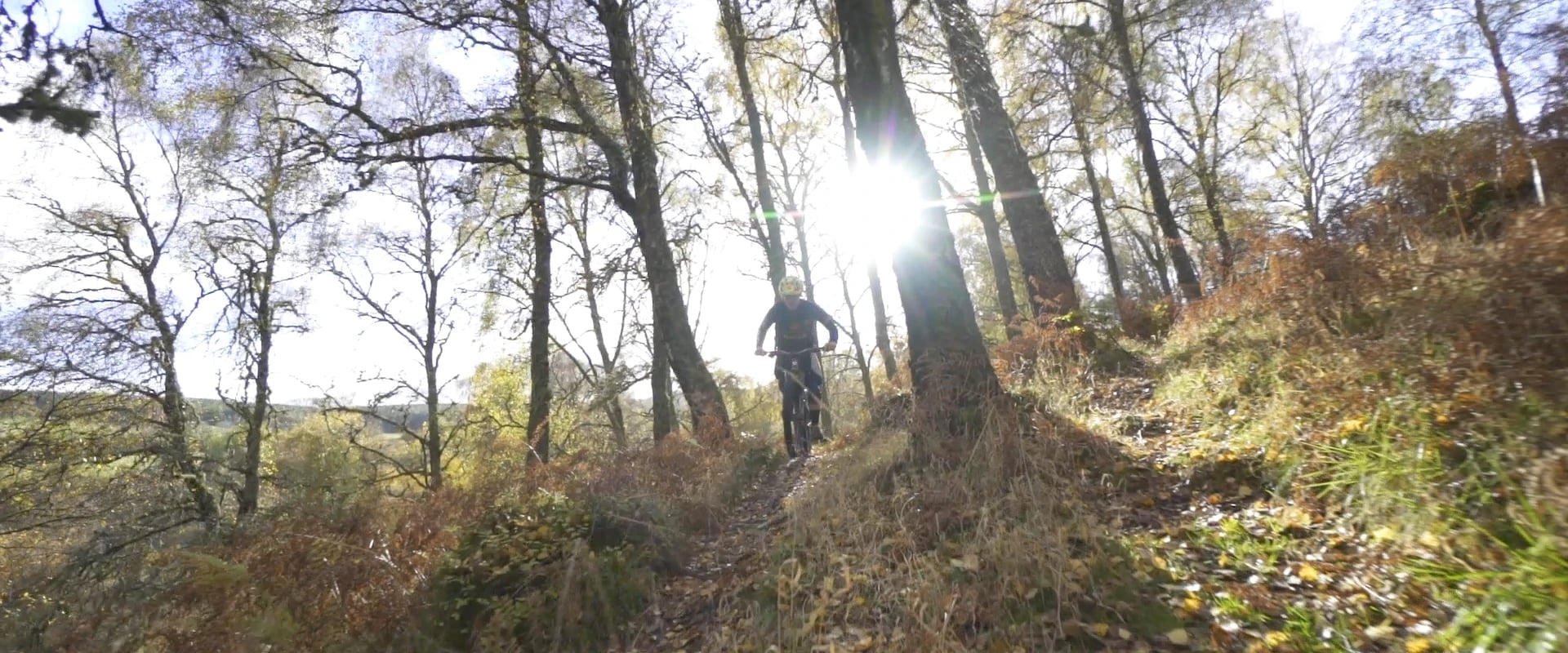
A canoe means the camera has to be on the water to be any use at all. Everything is moving, nothing can be put down, and the light coming off the surface changes the exposure between one paddle stroke and the next. A three discipline day, cycling into canoeing into walking, means three different paces and three different sets of positions that are both safe and useful, with the requirement that the camera is in place before anything happens rather than arriving after it. A walking micro-adventure looks like the easy one and is not, because the group spreads out along a path and the conversation you want is rarely happening next to you.
None of this is exotic. It is the ordinary business of filming people moving outdoors, which is a skill set usually associated with sport and adventure work rather than with corporate clients. That is precisely why it transfers.
Cover the range, not just the flagship
The instinct when commissioning film is to make one good film about the main thing. It is usually the wrong instinct for a business with several distinct offers.
A prospective client does not arrive at the front door and work inwards. They arrive on the page for whichever format a colleague mentioned, and if that page has nothing to watch, the film about the flagship offer somewhere else on the site does not help them. Four films covering four offers means every entry point has something that answers the question the visitor actually has.
It also produces a useful hierarchy by accident. The eighty three second canoe film explains the whole idea faster than anything else in the set, which makes it the one to lead with in a feed or an email. The three minute films are for people who have already decided the idea is interesting and now want to know what a day is actually like. Those are different audiences at different stages, and one film cannot serve both.
The four films are collected in the Fresh Air Leadership Company case study, and the wider approach is set out under corporate video production in Scotland.