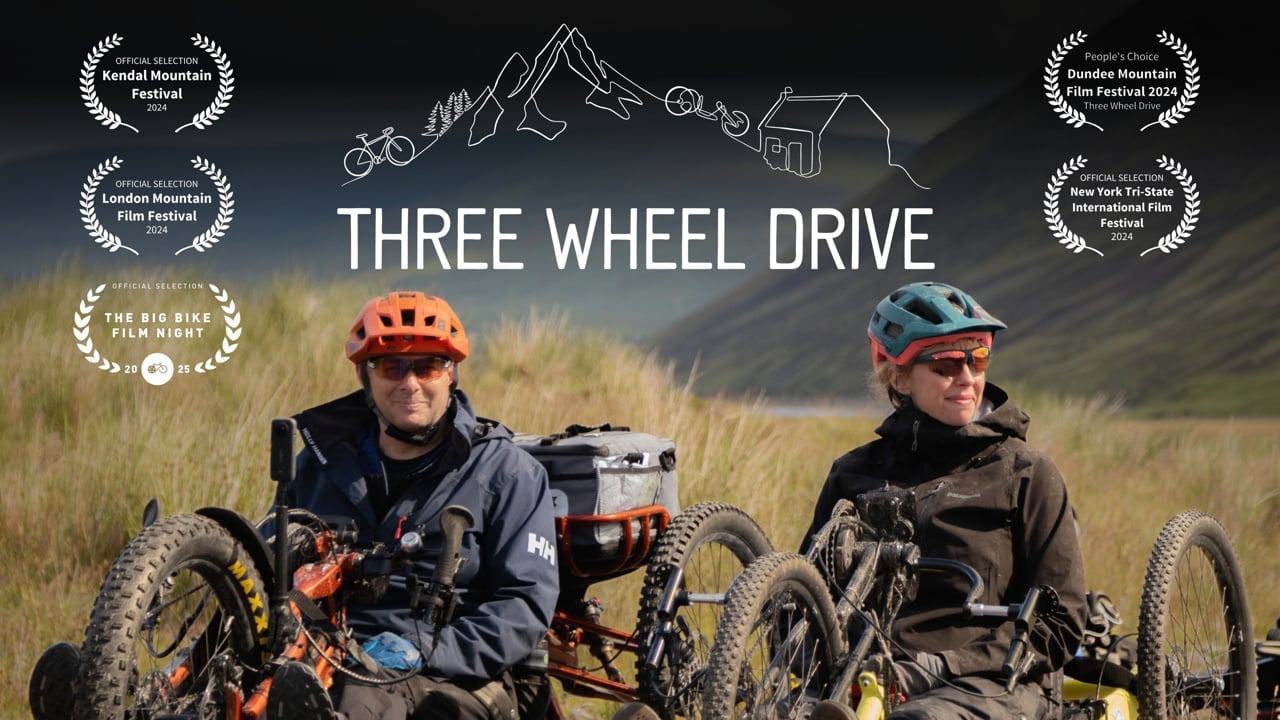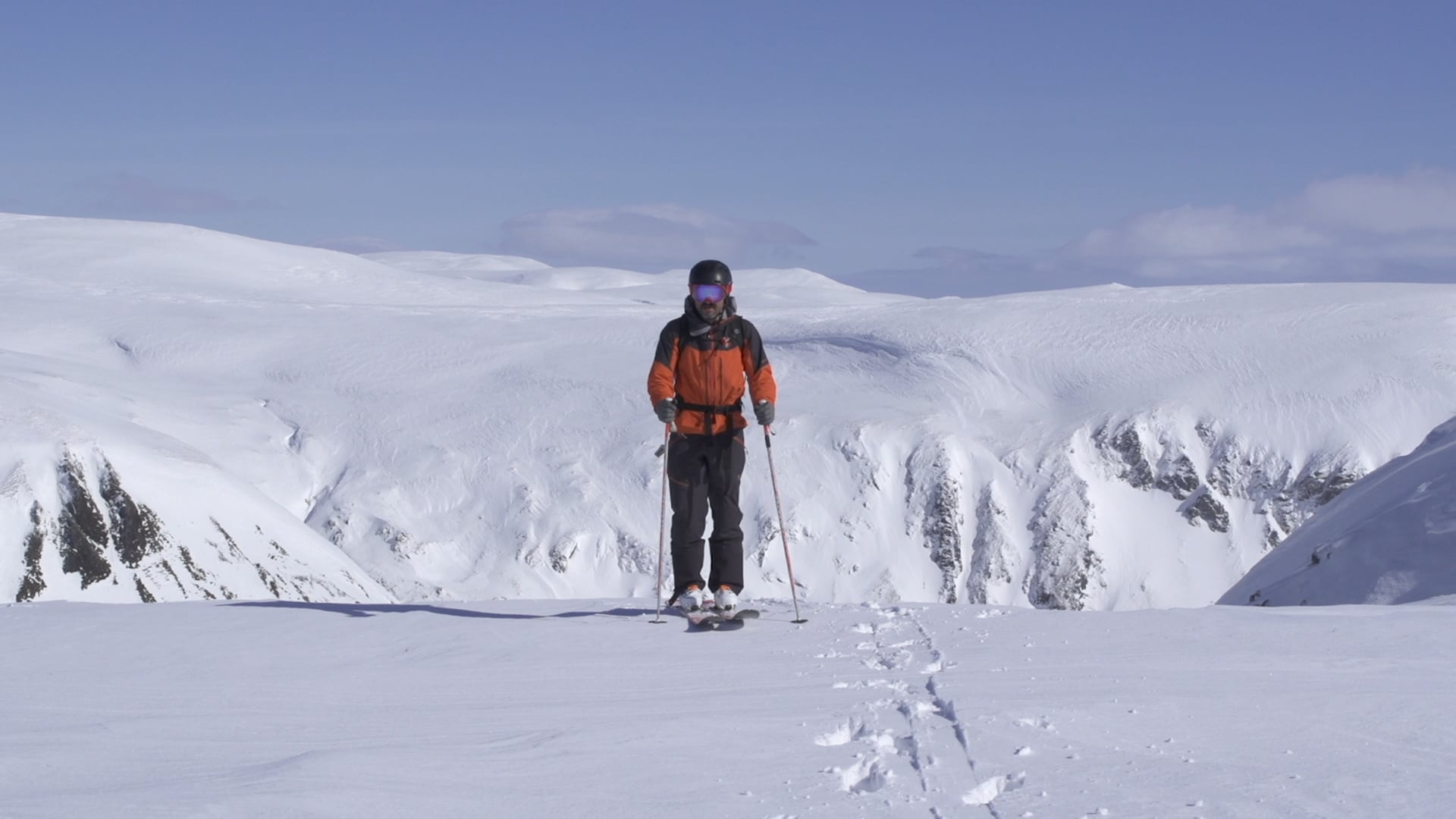
Several of our films have been through the adventure film festivals circuit, and two of them show clearly what the circuit rewards. Comfort Zones, a twelve-minute documentary on steep skiing at Glenshee, was selected by six festivals in 2019, including Kendal Mountain Festival and the Sheffield Adventure Film Festival. Three Wheel Drive, made with the Adaptive Riders Collective, was selected for Kendal, the London Mountain Film Festival and the New York Tri-State International Film Festival in 2024, won the People’s Choice award at the Dundee Mountain Film Festival the same year, and was selected for The Big Bike Film Night in 2025. This post sets out what those two films have in common, what festival programmers appear to be looking for, and which athletes, brands and organisations stand to gain from making a film with festivals in mind.
What adventure film festivals select for
The most useful thing to understand about adventure film festivals is that they are built around an audience in a room. A programmer is assembling a session for people who have paid to sit together in the dark, and every film in that session has to hold attention on a large screen without the option of scrolling past it. That is a different test from the one a film faces online, where the first three seconds decide everything and the remaining two minutes are often skipped.
Neither film was a montage. Comfort Zones asks why anyone skis terrain where a fall has consequences, and answers through two academic philosophers, Dr Philip Ebert and Professor Laurie Paul, alongside the skiing. Three Wheel Drive is about adaptive mountain biking, and underneath that it is about who gets to access Scotland’s wild places on a bike. Both treat their subject as something to be explained rather than illustrated. Our reading is that programmers see a great deal of well-shot action, and what they cannot easily find is a film with an idea that survives the end credits.
The action still has to be good. Nobody stays for the thinking if the skiing or the riding looks soft, and a festival audience is full of people who do the sport themselves and will notice. Comfort Zones only works because the steep skiing earns its place on screen before the philosophers say a word. Three Wheel Drive films the riding as sport, with line choice and terrain reading treated seriously, rather than as a backdrop to an emotional beat.
Running time and the shape of a festival film
Comfort Zones runs to just under twelve minutes. That is long for a self-initiated film with no distributor, and it was a deliberate choice: a shorter cut could have shown the skiing or stated the idea, but not both. Festival sessions are built from a mix of lengths, and a short film under fifteen minutes is far easier for a programmer to fit into a session than a forty-minute one, because it leaves room for the rest of the programme.
Length should still follow the material. A film padded out to look substantial is worse than a tight one, and programmers watch a great many submissions. The question to ask in the edit is whether every section is doing work the audience would miss if it went. If the answer is yes for twelve minutes, the film is twelve minutes long.
Made alone, made with a community
The two films were made in very different ways, which is a useful point in itself. I filmed and edited Comfort Zones alone, with no client, no brief and no budget. On steep ground the camera operator stands in the same conditions as the skier, which limits what can be carried and where it is safe to stand, and means every shot has to be chosen before the position is committed to.
Three Wheel Drive was made with the Adaptive Riders Collective, and the testimony of the riders carries the argument the riding cannot make on its own. A legal right to roam and a physically rideable trail are not the same thing, and that gap only lands on screen when the people affected by it say so in their own words. A People’s Choice award is voted for by the audience rather than a jury, which made the Dundee result particularly satisfying: it was the room, not a jury, that chose it.
Neither model is better. What they share is a subject the filmmaker cared about enough to give it the length and seriousness it needed.
Who should consider a festival film
Adventure film festivals are not the right destination for most commissioned work. A tourism board needs a film that performs on its website and social channels; a corporate client needs a film that does a specific job for a specific audience. Those briefs are best served by the work our sport and adventure filmmaking and tourism services already do.
A festival film makes sense in three situations:
- An athlete or expedition with a story beyond the result. A record attempt, a first descent or a long expedition can carry a festival film if there is something to say about why it was done, not only that it was done.
- A charity or community group with a cause rooted in the outdoors. Access, conservation and inclusion are subjects festival audiences care about, and a well-made documentary reaches people who would never visit a campaign page.
- An outdoor brand prepared to step back. The festival films that carry brand support well tend to keep the brand in the credits and out of the story. A film that reads as an advert will not be programmed.
The return is reach and credibility rather than revenue. Festival selection is judged by people with no commercial interest in the outcome, against a field of films made for the same audience, and it gives a film a second life well beyond its first release. Three Wheel Drive was still being selected a year after its first screenings.
Planning an adventure film with festivals in mind
If a festival run is part of the plan, it changes a few decisions early on, and these are much cheaper to get right before filming than after.
Music rights. Library and commercial music licensed for online use does not always cover public screenings. Clear the music for festival exhibition at the outset, or commission original music.
Premiere status. Some festivals prefer, or require, that a film has not already been released online or screened in their region. If festivals are the priority, hold the online release until the festival run is under way.
A master for the big screen. A festival projects a film far larger than any laptop. The grade, the sound mix and the subtitles all need to be finished to a standard that holds up in a cinema, which is where our colour grading and post-production work earns its keep.
A documentary treatment, not a promo. If the film has an argument, plan the interviews from the first recce rather than fitting them in around the action. Our documentary production page sets out how we approach that kind of commission, and the Comfort Zones case study shows the approach in full.
Films with festival ambitions that sit at broadcast scale may belong with Quiet Eye Productions, our sister company for sport and adventure documentary, co-founded in 2024. We will say which is the better fit when we first speak.
Frequently asked questions
Which adventure film festivals have selected Morrocco Media films?
Several, including these two. Comfort Zones was selected by Kendal Mountain Festival, the Sheffield Adventure Film Festival, the International Festival of Outdoor Films, the 4S Skate Surf Ski Snowboard Film Festival, the Adventure Shorts Film Festival and IFMF in Poprad, Slovakia, all in 2019. Three Wheel Drive was selected for Kendal Mountain Festival, the London Mountain Film Festival and the New York Tri-State International Film Festival in 2024, won the People’s Choice award at the Dundee Mountain Film Festival in 2024, and was selected for The Big Bike Film Night in 2025.
How long should a film for an adventure film festival be?
Long enough to do what it sets out to do, and no longer. Shorter films are easier for programmers to place in a session, so a film under fifteen minutes has more chances than a long one. Comfort Zones runs to just under twelve minutes because that was the shortest cut that could carry both the skiing and the idea.
Can a brand-funded film be selected for an adventure film festival?
Yes, if the brand stays out of the story. Festival audiences and programmers respond to films with a genuine subject, and a film that reads as an advert is unlikely to be programmed. Brand support is best credited rather than featured.
Is it worth making an adventure film for festivals?
For an athlete, charity or brand with a story that deserves more than a two-minute edit, yes. Festival selection brings independent credibility and puts a film in front of an engaged audience, often over more than a year. It is not a route to direct revenue, and most commissioned work is better served by online distribution.